

Sharjah’s Coastal Fortified Network added to UNESCO World Heritage Tentative List
Ancient ports trace centuries of trade, defence and maritime exchange
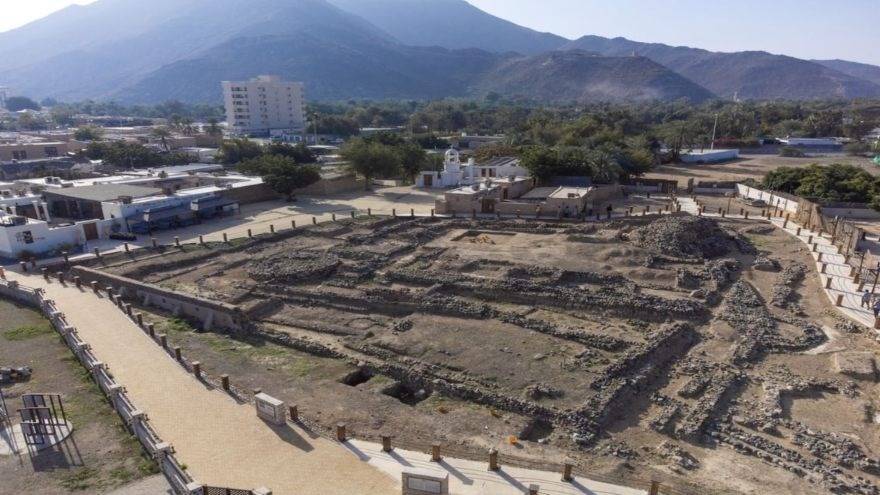
SHARJAH – Sharjah’s Coastal Fortified Network of South Eastern Arabia has been added to UNESCO’s Tentative List for World Heritage, marking another significant step in the emirate’s efforts to document, protect and promote its archaeological heritage.
The serial property brings together three interconnected sites: Dibba Al-Hisn, Khor Fakkan and Khor Kalba, which collectively trace more than two millennia of maritime history along the Oman Sea.
The Sharjah Archaeology Authority announced the development on Wednesday, with the submission file prepared by its Sharjah World Heritage Office. The three locations preserve archaeological, architectural and landscape evidence of coastal communities whose activities were closely linked to maritime trade, navigation, defence and coastal administration.
Together, the sites illustrate how the eastern coast of the Arabian Peninsula developed as part of wider Indian Ocean networks, connecting the region with commercial and cultural routes extending towards Persia, India, East Africa and the Mediterranean. Their history spans successive periods, including the integration of their ports into Indian Ocean trade networks, the era of the Kingdom of Hormuz, Portuguese influence during the 16th and 17th centuries, and later administration under Al Qasimi authority.
The addition also takes the number of UAE properties on UNESCO’s Tentative List to 16, with six of those sites located in Sharjah. The listing reflects ongoing scientific research, archaeological investigation and heritage conservation work aimed at preparing the emirate’s sites in accordance with World Heritage standards and requirements.
Maritime corridor
The proposed serial property is built around three locations that operated within a connected coastal system despite their different geographical settings and historical functions.
Dibba Al-Hisn forms the northern component, occupying a strategic position on Dibba Bay at the southern edge of the Musandam Peninsula. Its archaeological record reveals a long sequence of human settlement and economic activity, with excavations at Dibba Fort uncovering layers dating from the Neolithic period through to the 20th century.
The discoveries include fortifications, production areas and structures associated with trade and everyday coastal life. Among the most notable findings are glass-working workshops where imported Roman and Mesopotamian ingots were re-melted to manufacture vessels locally.
Archaeologists have also identified 12 madābis, traditional installations used for processing dates, as well as pearl-processing facilities and a 19th-century fish-salting installation.
These remains provide evidence of a settlement that was not only occupied over a long period but also played an active role in production and commerce. Its location placed Dibba within long-distance maritime networks that connected the Arabian Peninsula with Persia, India, East Africa and the Mediterranean.
Historical and archaeological evidence points to Dibba’s early importance within Indian Ocean exchange systems. Over time, the settlement became one of the principal components of the fortified coastal system reorganised under Al Qasimi authority.
The site therefore contributes evidence of several layers of maritime history, from early trading connections and local production to later systems of coastal defence and administration.
Khor Fakkan forms the central component of the serial property. Its location on the eastern coast of the Arabian Peninsula gave it a particularly important position in maritime activity. The Hajar Mountains descend directly towards the sea in the area, creating a naturally sheltered harbour and protected bay.
The harbour’s geography helped make Khor Fakkan an important point for navigation and trade. Archaeological investigations have identified two principal fortified sites, known as the East Fort and West Fort, alongside settlement remains and stone-built houses dating to the 15th and early 16th centuries.
A surviving section of the historic town wall extends for more than 155 metres, adding further evidence of the settlement’s defensive and urban development.
The West Fort is particularly significant because it contains three superimposed phases of fortification. Each phase reflects a different period in the site’s strategic and political history.
The earliest fortification has a triangular plan and is interpreted as a 17th-century Portuguese structure. It was followed by a rectangular fort dating to the latter half of the 18th century, corresponding with a period of Arab consolidation.
A third phase saw the construction of a square fort featuring a round tower during the 19th century under Al Qasimi rule.
The successive structures demonstrate how control of Khor Fakkan changed over time and how its strategic importance evolved. The harbour ultimately developed into a principal maritime centre under Al Qasimi rule, connecting traffic along the Oman Sea with inland routes crossing the Hajar Mountains.
Fortified settlements
Khor Kalba, the southern component of the proposed serial property, lies on a sandy coastal plain at the mouth of Kalba Creek. Its wider setting includes the creek, shallow water bodies and surrounding mangrove forests, creating a coastal landscape closely associated with the history of the settlement.
Historical sources indicate that Kalba was a fortified settlement under the Kingdom of Hormuz before it was captured by the Portuguese in 1624.
The Portuguese subsequently established a rammed-earth fortification on stone foundations. The structure was designed to support navigation, trade and maritime supply operations, reflecting the strategic importance of the settlement within the wider coastal network.
Archaeological excavations have identified the remains of this fortification. They include a quadrangular enclosure wall, two circular corner towers and a principal entrance on the southern side.
The fort’s design and location provide evidence of the way coastal settlements were adapted to serve several functions at once, including defence, maritime movement and the supply of vessels operating along the coast.
Following the decline of Portuguese influence, Kalba entered the maritime sphere of the Al Qawasim. It subsequently played an important role in supply operations, defence and the regulation of maritime movement along the coast of the Gulf of Oman.
The three sites therefore preserve different but interconnected aspects of the same broader historical system. Dibba Al-Hisn provides evidence of long-term settlement, manufacturing, trade and maritime connections; Khor Fakkan records the development of a naturally sheltered harbour and successive defensive structures; while Khor Kalba preserves evidence of a fortified coastal settlement shaped by Portuguese and later Al Qasimi control.
Their relationship is central to the proposed serial property. Rather than representing isolated archaeological locations, the sites demonstrate how ports, settlements, defensive structures and coastal landscapes operated together as an integrated maritime network.
Across the centuries, the network supported activities ranging from navigation and commercial exchange to coastal defence, supply and administration. The archaeological remains also show how these functions changed as political authority and maritime trade patterns evolved.
Sheikha Bodour bint Sultan Al Qasimi, UNESCO Goodwill Ambassador for Education and Book Culture and Ambassador of the Faya World Heritage Property, said the inclusion of six Sharjah sites among the UAE’s 16 Tentative List properties reflected an integrated cultural project focused on research, preservation and knowledge.
She said heritage should be viewed not only as evidence of the past but also as knowledge and a responsibility extending into the future. She attributed the emirate’s approach to the long-term vision of His Highness Sheikh Dr Sultan bin Mohammed Al Qasimi, Supreme Council Member and Ruler of Sharjah, who established scientific research and heritage conservation as key pillars of Sharjah’s cultural project.
Sheikha Bodour also highlighted the importance of creating a sustainable system capable of studying, protecting and presenting heritage sites according to high scientific standards.
The significance of the latest achievement, she said, extends beyond the number of properties included on the Tentative List, with the wider objective being to ensure that heritage sites remain part of humanity’s shared memory and that their knowledge and value are passed to future generations.
Eisa Yousif, Director-General of the Sharjah Archaeology Authority, said the inclusion followed a long period of research, documentation and protection work.
He said the next stage would involve intensifying archaeological research and studies associated with the three sites, with the aim of deepening scientific understanding of their components and historical significance.
The authority also plans to develop a more comprehensive body of knowledge that can support a future international nomination process while protecting the sites’ historical value and ensuring their sustainable conservation.
Through the Sharjah World Heritage Office, the authority is continuing to assess the emirate’s cultural and heritage sites and expand the scientific research and archaeological documentation supporting them.
According to Yousif, this work is being carried out in line with the scientific standards and requirements of the World Heritage Convention. The resulting research and evidence are intended to provide the foundation for future international nominations by establishing the historical and cultural significance of Sharjah’s heritage sites.
The latest Tentative List entry builds on Sharjah’s wider archaeological and conservation programme and follows the emirate’s successful international recognition of the Faya Palaeolandscape.
In July 2025, the Faya Palaeolandscape was inscribed on the UNESCO World Heritage List. At the time, it became the second site in the UAE to receive the global designation, following the Cultural Sites of Al Ain, comprising Hafit, Hili, Bidaa Bint Saud and Oases Areas, which were inscribed in 2011.
The Coastal Fortified Network of South Eastern Arabia now adds another serial property to the UAE’s Tentative List, bringing together three coastal sites whose surviving fortifications, settlements, production facilities, harbours and landscapes document the region’s evolving relationship with maritime trade and authority.